


We can't find the internet
Attempting to reconnect
Something went wrong!
Hang in there while we get back on track
EXHIBITION
Gottfried Bechtold. Betonporsche (Concrete Porsche)
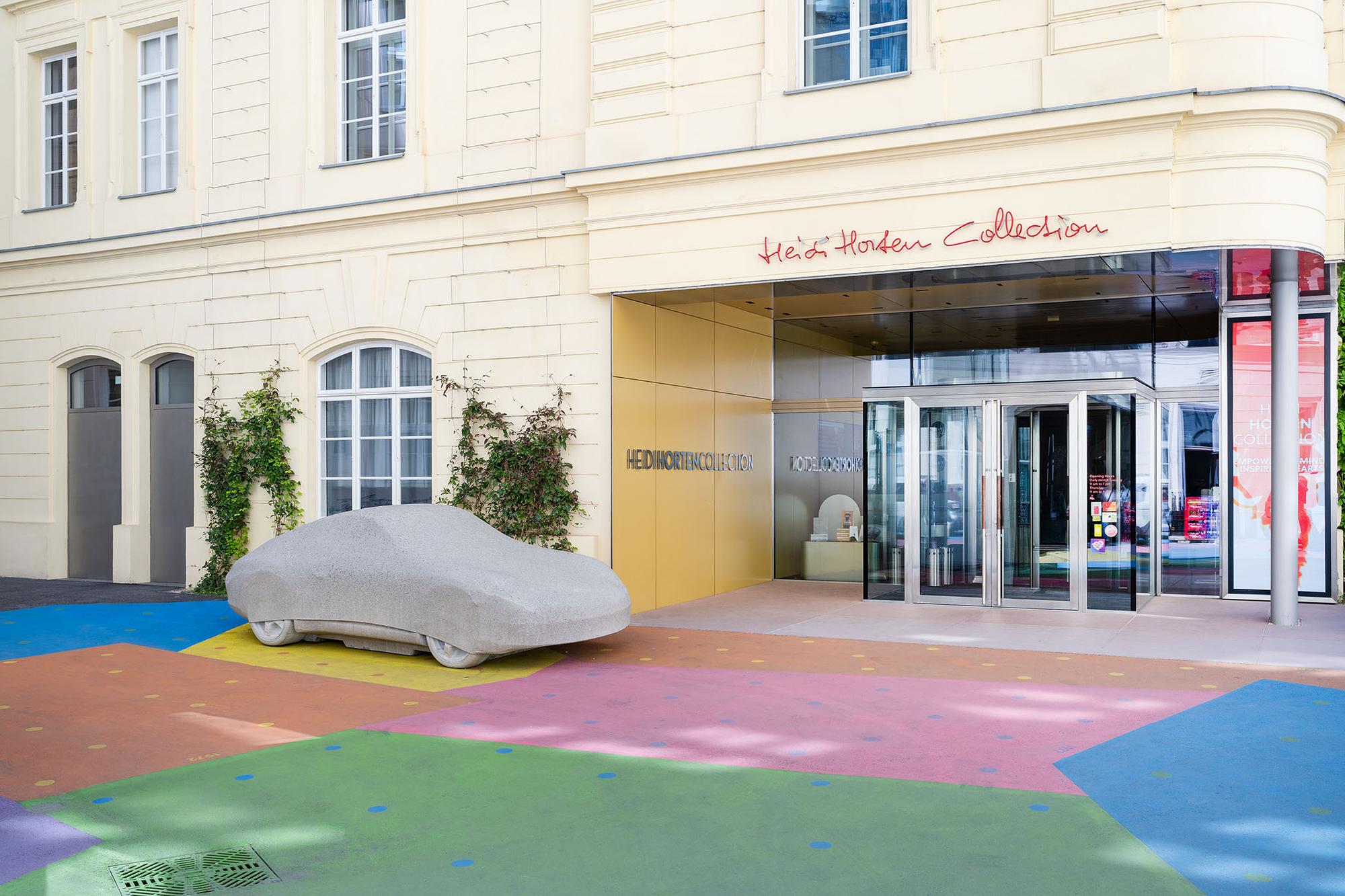
Gottfried Bechtold, Kiwanis Porsche
Gottfried Bechtold (*1947) is considered one of the defining figures of Austrian contemporary art. Since the late 1960s, he has developed a rigorously conceptual, cross-media practice encompassing sculpture, photography, drawing, text, and performative interventions in public space. His work is characterized by a precise analysis of social symbols and a sustained inquiry into perception, attribution of value, and the very conditions of artistic production.
Bechtold gained international recognition in particular for his engagement with the automobile as a cultural, economic, and ideological object. Since the 1970s, he has explored the car as a projection surface for beliefs in progress, promises of mobility, notions of status, and ideas of individual freedom.
The Concrete Porsche is among Bechtold’s most iconic works. The sculpture is an exact replica of a Porsche 911, cast in solid concrete. An object that normally stands for speed, elegance, and technical perfection is rendered literally heavy, immobile, and monumental. Concrete—symbolic of permanence, the construction industry, and urban infrastructure—stands in radical contrast to the very idea of a sports car. By stripping the object of its function, Bechtold transforms it into a sculpture that negates mobility while simultaneously exposing and questioning its cultural glorification.

29 April to 11 October 2026
At the end of April 2026, a Concrete Porschefrom the series Elf Elf (2006) will pull into the so-called “Director’s Parking Space” in the Hanuschhof courtyard. Weighing several tons, the sculpture subverts the promises of speed, freedom, and individual accessibility commonly associated with the automobile. Within the specific context of the courtyard, the work also unfolds a subtly ironic commentary on questions of ownership, privilege, and the hierarchical organization of space—particularly with regard to parking spaces as markers of power and status.
Bechtold’s interventions in public space are always defined by their precision of placement. At first glance, the Concrete Porsche appears familiar, yet its physical presence and materiality create a moment of dissonance. This very ambivalence—between recognizability and estrangement—is central to Bechtold’s artistic strategy. His works invite viewers to reread everyday symbols and to question their social meanings.
Complementing the installation, the auditorium will present photographs, films, and serial works that contextualize the Concrete Porsche and illuminate Bechtold’s long-standing engagement with the motif of the automobile, as well as with issues of reproduction, seriality, and documentation. These works make clear that the Concrete Porsche is not to be understood as a singular object, but as part of an artistic field of inquiry developed over decades.

Download Presstext
Download Catalogue

Gottfried Bechtold, Elf Elf, 2006
selbstverdichteter Beton, ca. 16,4 t
130 x 443 x 181 cm
Foto: © Simon Veres, Heidi Horten Collection

Gottfried Bechtold, Elf Elf, 2006
selbstverdichteter Beton, ca. 16,4 t
130 x 443 x 181 cm
Foto: © Simon Veres, Heidi Horten Collection

Gottfried Bechtold, Elf Elf, 2006
selbstverdichteter Beton, ca. 16,4 t
130 x 443 x 181 cm
Foto: © Simon Veres, Heidi Horten Collection

Gottfried Bechtold, Elf Elf, 2006
selbstverdichteter Beton, ca. 16,4 t
130 x 443 x 181 cm
Foto: © Simon Veres, Heidi Horten Collection

Gottfried Bechtold
Foto: © Miro Kuzmanović, Heidi Horten Collection

Ausstellungsansicht Gottfried Bechtold. Betonporsche
Foto: © Simon Veres, Heidi Horten Collection

Ausstellungsansicht Gottfried Bechtold. Betonporsche
Foto: © Simon Veres, Heidi Horten Collection

Ausstellungsansicht Gottfried Bechtold. Betonporsche
Foto: © Simon Veres, Heidi Horten Collection
EXHIBITION
Animalia. Of Animals and Humans
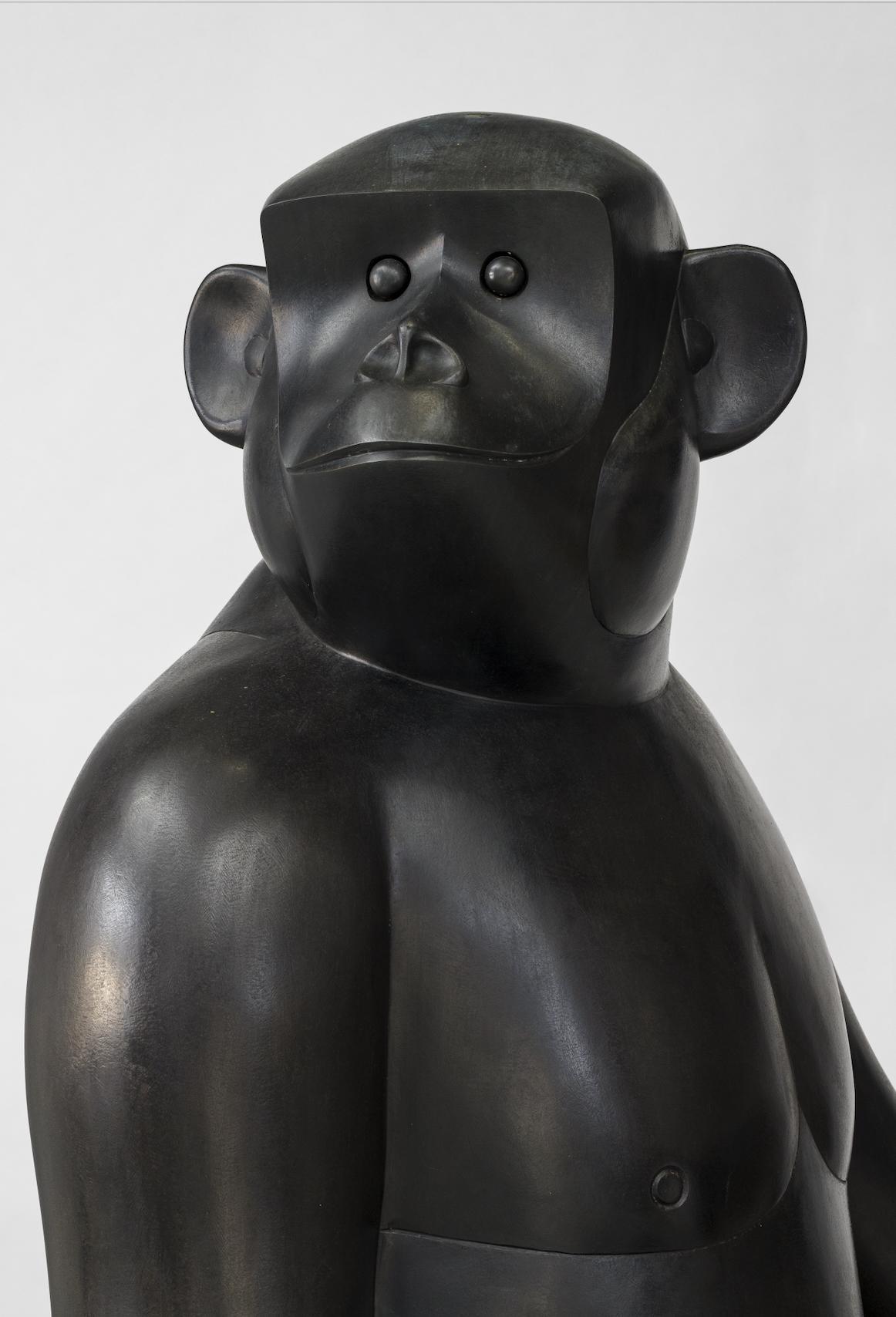
Francois Xavier Lalanne, Singe avise (trés grand), 2005/08, Bildrecht, Wien, 2026
With the exhibition Animalia. Of Animals and Humans, the Heidi Horten Collection explores the complex relationship between humans and animals. The term “Animalia,” borrowed from biology, serves as the guiding principle for a critical examination of how humans interact with animals, as reflected in over 100 works of art from the 20th and 21st centuries.
Derived from *anima*, the Latin word for breath or soul, the term *Animalia*—coined by the naturalist Carl von Linné (1707–1778)—encompasses both humans and animals alike. In contrast to this model of equality, humanity’s treatment of animals is characterized by a clear hierarchy.
As the supposed “pinnacle of evolution”—a rational being that rises above the animal world—humans assign animals ambivalent roles. Artistic representations that make these differing attributions visible reveal a great deal about humans themselves; they allow us to draw conclusions about their self-image and their methods of projection. Thus, humans are already present in every image of an animal—even when they are not part of the depiction.
The exhibition explores the question of which social, societal, and historical structures are inscribed in depictions of animals. These range from the idea of “man’s best friend” through the anthropomorphization and reification of animals to their exploitation. At the same time, the exhibition offers a perspective on ANIMALIA as a thought experiment—going beyond a shared biological category—as the principle of a shared model of life that conceives of animals as fellow creatures and co-actors.
Download Catalogue

François-Xavier Lalanne, Singe Avisé (très grande), 2005/2008 Heidi Horten Collection, © Bildrecht Wien, 2026

Roy Lichtenstein, Forest Scene, 1980, Heidi Horten Collection, © Estate of Roy Lichtenstein / Bildrecht Wien, 2026

Marc Chagall, L'âne vert, ca. 1936, Heidi Horten Collection, © Bildrecht Wien, 2026

Melanie Thoeni, fake fur, 2024, Privatsammlung, © Bildrecht, Wien, 2026

Matthias Garff, Insektenkasten (Mexiko IV), 2023 © der Künstler

Ausstellungsansicht Animalia, 2026, Foto: Simon Veres, (c) Heidi Horten Collection

Ausstellungsansicht Animalia, 2026, Foto: Simon Veres (c) Heidi Horten Collection

Ausstellungsansicht Animalia, 2026, Foto: Simon Veres (c) Heidi Horten Collection

Ausstellungsansicht Animalia, 2026, Foto: Simon Veres (c) Heidi Horten Collection

Ausstellungsansicht Animalia, 2026, Foto: Simon Veres (c) Heidi Horten Collection

Ausstellungsansicht Animalia, 2026, Foto: Simon Veres, (c) Heidi Horten Collection

Ausstellungsansicht Animalia, 2026, Foto: Simon Veres (c) Heidi Horten Collection

Ausstellungsansicht Animalia, 2026, Foto: Simon Veres (c) Heidi Horten Collection

Ausstellungsansicht Animalia, 2026, Foto: Simon Veres (c) Heidi Horten Collection

Ausstellungsansicht Animalia, 2026, Foto: Simon Veres (c) Heidi Horten Collection

Birgit Jürgenssen, Ohne Titel (Selbst mit Fellchen), 1974, Heidi Horten Collection, © Bildrecht Wien, 2026

Lena Henke, UR Mutter, 2019 Heidi Horten Collection, © die Künstlerin

Yan Pei-Ming, Tigres et Vautours, 2015, Heidi Horten Collection, © Bildrecht, Wien, 2026

Curt Stenvert, Nichts ist absolut, außer ... 6: Das Bild des Menschen, 1969, Österreichische Galerie Belvedere, Wien, © Bildrecht, Wien, 2026

Ulrike Müller, Rug (las criaturas), 202, Heidi Horten Collection, © die Künstlerin
Verena Kaspar-Eisert's Inaugural Press Conference
With Verena Kaspar-Eisert taking the helm, the Heidi Horten Collection is positioning itself as an open space for thought and experience, where the collection, exhibition program, and art education interact on an equal footing. The existing collection will be consistently reinterpreted from a contemporary perspective, strategically expanded—particularly to include female and contemporary artists—and placed in dialogue with current social issues.
The 2026 program spans a thematic arc from the major spring exhibition *ANIMALIA: Of Animals and Humans* to exciting artistic interventions in public space such as *Gottfried Bechtold. Betonporsche to a comprehensive solo exhibition on Elisabeth von Samsonow, as well as collection presentations centered on Andy Warhol’s early work. The exhibition program is accompanied by a wide range of educational offerings with a strong focus on inclusion, children, and young people.
You can find all details regarding the program, collection, educational programs, and institutional mission in the press release download.


Heidi Horten Collection, Foto: Ouriel Morgensztern


Heidi Horten Collection, KLIMT ⇄ WARHOL, Fotos: Ouriel Morgensztern


Verena Kaspar-Eisert, Direktorin, Foto: Klaus Pichler
CO2ntext
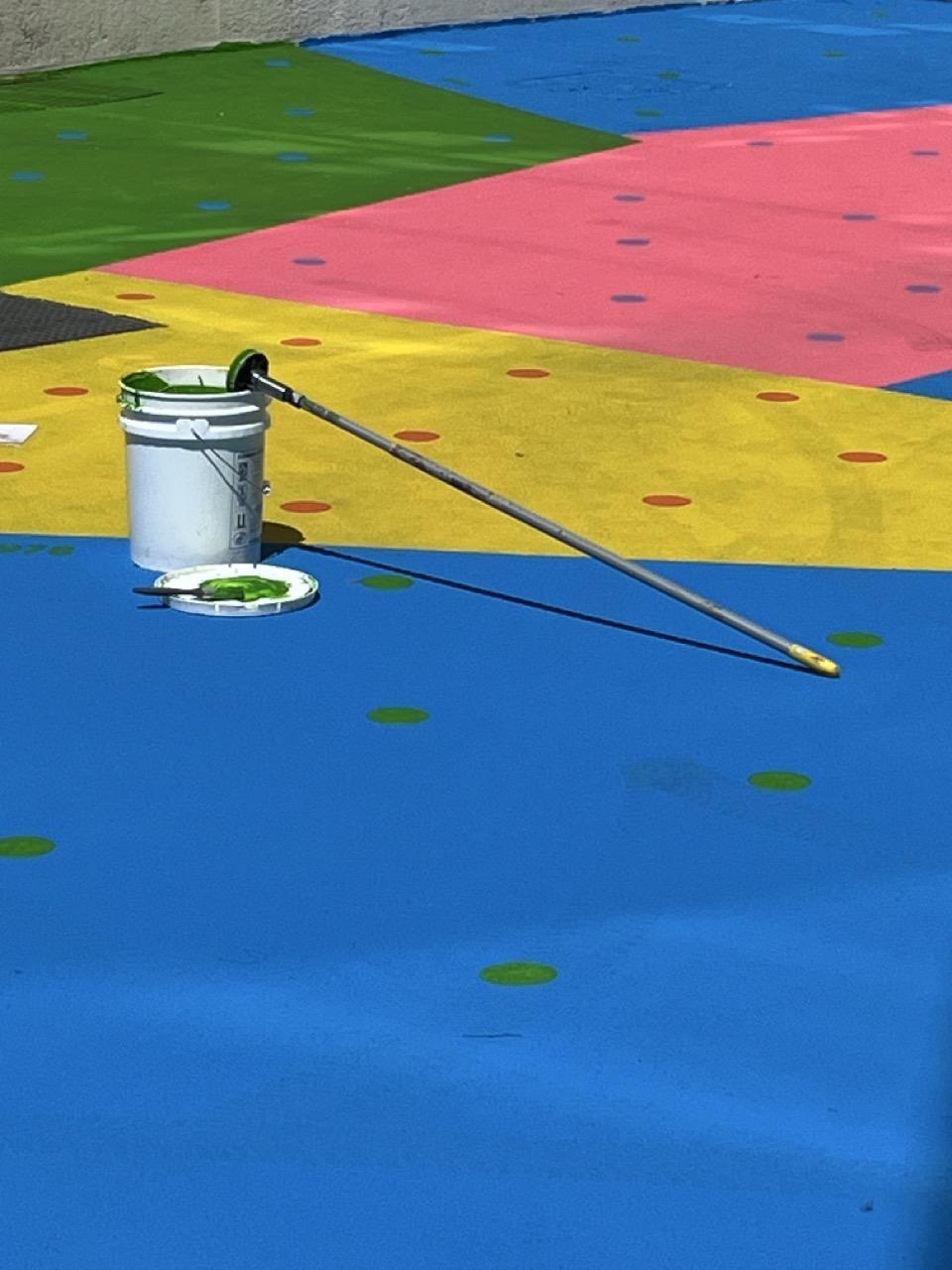
Projekt: CO₂ntext Foto: Bundestheater Holding © Bundestheater Holding
Through the CO₂ntext project, the Heidi Horten Collection, in collaboration with the Bundestheater-Holding and ART for ART, is sending a clear message about climate awareness and sustainable urban design. The focus is on the colorful floor murals in the Hanuschhof—the plaza between the Heidi Horten Collection and the surrounding buildings—which are not only aesthetically pleasing but also have a positive effect on the microclimate.
“It was a central concern of ours to use the Heidi Horten Collection not only to create a space for art but also to actively assume social responsibility. With CO₂ntext, we’re transforming the Hanuschhof into a place that brings together climate, city, and art—and demonstrate that even small urban interventions can have a big impact,” say the curators of the Heidi Horten Collection.
since June 2025
The Graz-based artist collective Holla Hoop designed the courtyard using an innovative, UV-reflective special paint that reflects the sun’s rays more effectively than, for example, a dark asphalt surface. The result: a measurable cooling of the microclimate in the Hanuschhof, which benefits not only museum visitors and the staff of the offices and costume workshops located there, but also residents and passersby in the surrounding area.